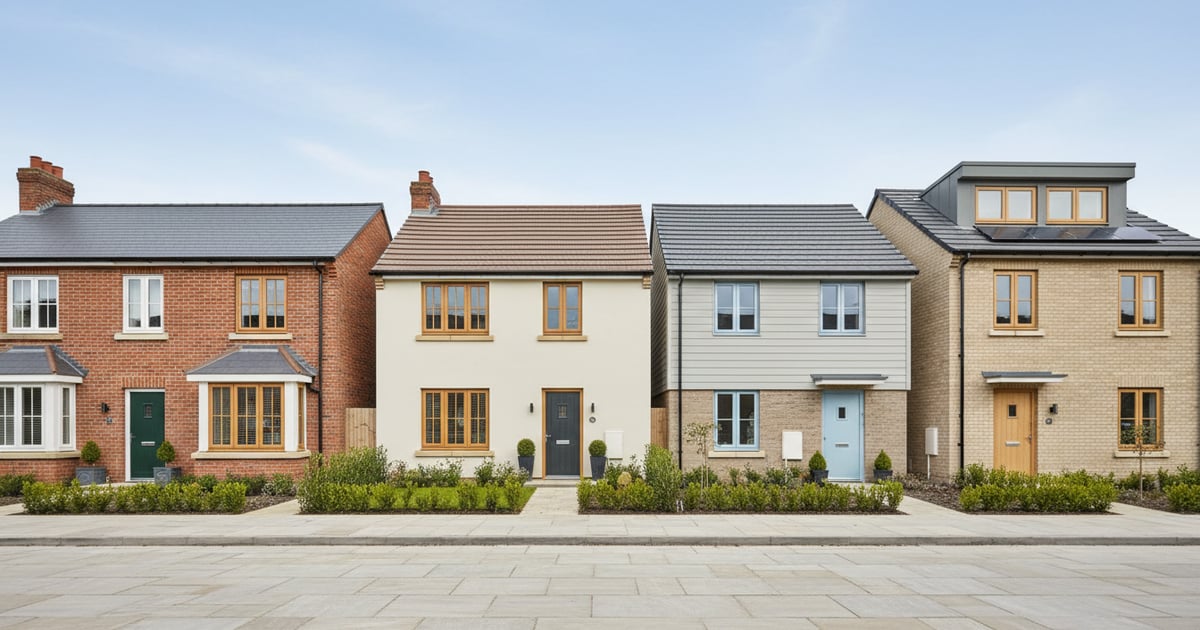
Renovation Cost by Property Type UK
Estimate YOUR property-specific renovation cost in 60 seconds — accounting for era-specific issues UK contractors price for.
Estimates based on UK trade benchmark data, updated 2 May 2026. Methodology →
In the UK, property type shapes access, party walls, roof area and typical room counts — so refurbishment budgets move with the building, not just the floor area. This guide pulls benchmark ranges for 3- and 4-bed houses, terraced homes, semis and bungalows so you can sense-check quotes against realistic national figures (with London and the South East usually higher).
Most projects fall between £71,400 and £96,600. Budget refreshes start near £28,500; premium projects reach up to £226,800.
Two ways to take action on Renovation by Property Type costs
Pick the path that fits where you are — running early numbers, or pressure-testing a quote you've already got.
Typical UK Cost by Scenario
Typical timeline: 2 to 9 monthsBudget
£47,850
typical figure
- Focused essentials
- Practical finishes
Mid-range
Most common£84,000
typical figure
- Balanced specification with core upgrades
- Reliable materials
Premium
£163,800
typical figure
- Premium materials
- Wider scope with higher coordination demands
Figures are typical UK averages including labour, materials, and VAT at 20% for standard-rated work.
Save money on your quote
Already got a quote from a builder?
Upload it and our AI Quote Checker flags overcharges, missing scope, and the questions worth asking — in about a minute.
Typical UK Cost Ranges for Renovation by Property Type
| Item | Cost Range |
|---|---|
| 3-bed house renovation | £36,000 – £108,000 |
| 4-bed house renovation | £54,000 – £168,000 |
| Terraced house renovation | £30,000 – £102,000 |
| Semi-detached house renovation | £36,000 – £120,000 |
| Bungalow renovation | £33,600 – £132,000 |
| Whole-home structural package | £72,000 – £216,000 |
All prices are approximate UK averages including labour, materials, and VAT at 20% (2026). Some qualifying renovations for empty homes may use the reduced 5% VAT rate.
Mini Renovation by Property Type cost calculator
Three quick inputs and we'll email you an indicative range. Run the full calculator for a postcode-adjusted estimate.
Real UK Cost Examples
- Budget scenario (3-bed semi, Birmingham): focused essentials and practical finishes. Not done: major layout or structural changes. Approx cost: £23,750 to £56,000.
- Mid-range scenario (typical homeowner, 3-bed terrace): balanced specification with core upgrades and reliable materials. Approx cost: £59,500 to £80,500.
- High-end scenario (4-bed detached): premium materials and wider scope with higher coordination demands. Main cost drivers: specification level and complexity. Approx cost: £84,000 to £189,000.
Related next steps:
What You Can Get For Your Budget
- Around £49,000: core refresh and essential upgrades, usually with no major layout change.
- Around £70,000: balanced refit scope with better materials and targeted performance improvements.
- £105,000+: wider flexibility on finish quality, scope depth, and more complex works.
Hidden Costs to Watch For
- Access constraints, parking, and logistics frequently raise final labour costs in UK projects.
- Waste removal, making-good, and repeat trade visits are common late-budget increases.
- Compliance and certification items are often missing from initial summary quotes.
- In most UK projects, scope changes after works start are where costs escalate fastest.
Should You Do This Renovation?
- Usually worth it when your property type's typical pain points — services, insulation, kitchens or bathrooms — are holding back comfort or value.
- Less worth it when the main issue is cosmetic and resale timing is short-term.
- Best return on spend when specification matches what similar homes achieve on your street.
Common Cost Mistakes
- Underestimating labour and preliminaries while focusing only on material prices.
- Changing scope mid-project without budget re-baselining.
- Choosing the cheapest quote without checking detailed inclusions and exclusions.
- Running too little contingency for hidden defects and compliance upgrades.
Key Cost Factors
- Total floor area and room count drive baseline labour and material quantities.
- Older properties usually need additional electrical, plumbing and insulation upgrades.
- Party wall and access limitations on terraces can increase programme length and skip costs.
- Bungalows often carry larger roof-to-floor-area ratios, making roof upgrades more material-heavy.
- Specification level, location and complexity can move final cost materially away from headline averages.
Property Type Comparison Snapshot
Use this quick lens to shortlist the most realistic budget range before detailed design.
- Terraced: often lower entry cost, but access and shared-wall coordination can slow progress.
- Semi-detached: balanced cost profile, flexible layouts, and strong resale impact for kitchen/bath upgrades.
- Bungalow: easier accessibility upgrades, but roof and envelope work can be disproportionately expensive.
- 4-bed homes: better economies on material procurement but higher absolute spend and programme management load.
5 line items every fair Renovation by Property Type quote should include
Use this checklist to spot missing scope before you sign — each item names what should be priced and what to ask for if it isn't.
- 1
Era-specific structural issues — joists, walls, roof
Pre-1900 properties: lath-and-plaster ceilings (£25-£45/m² to replace, NOT patch repair); single-skin solid walls (no cavity insulation possible without IWI); Victorian roof timbers may need replacement. 1960s-80s: timber-framed flat roofs commonly fail; steel-framed houses (BISF) need specialist treatment.
Fair UK range: Pre-1900 adds £30-£80/m² over standard for structural era issues; 1960s-80s £20-£40/m².
Ask: What era-specific structural issues are you allowing for, and is the budget separate from cosmetic renovation?
- 2
Asbestos survey + handling (1900-1980 properties)
UK properties built 1900-1980 commonly contain asbestos in: artex ceilings, floor tiles (vinyl + bitumen backing), pipe lagging, soffits, eaves, garage roofs. Removal requires HSE-licensed contractors. Survey is mandatory before renovation work.
Fair UK range: £300-£700 for management survey; £1,200-£4,000 for licensed removal of confirmed asbestos.
Ask: Have you allowed for asbestos survey before work begins, and is licensed removal contingency in the budget?
- 3
Period features — restoration vs. replacement
Pre-1940 properties often have: original sash windows (£800-£1,800 each to refurbish vs. £1,500-£3,000 to replace with timber heritage; uPVC saves money but kills period character and resale value), original tile floors (specialist cleaning vs. removal), cornicing, panelling. Decision matters for value.
Fair UK range: Sash window restoration £800-£1,800 each; original floor restoration £40-£90/m².
Ask: What's the strategy on period features — restore (preserves value) or replace with modern (reduces character but cheaper)?
- 4
Services — wiring, plumbing, heating systems by era
Pre-1960: rubber-insulated wiring (mandatory full rewire for safety); galvanised steel water pipes (corrode internally, need replacing); often single-glazed throughout. 1960s-1980s: aluminium wiring sometimes (specialist replacement), Twin-and-Earth cables likely fine if 1980s. Modern: usually OK but 80s/90s wiring may need consumer unit upgrade.
Fair UK range: Pre-1960 properties: full services rewire/replumb £15k-£25k. Post-1990: usually £4k-£8k upgrade.
Ask: What's the wiring/plumbing condition for this property era, and is full replacement included?
- 5
Compliance upgrades — Part L (insulation), Part F (ventilation)
Renovation work triggers requirements to bring elements up to current standards: any wall opened up needs insulation upgrade to Part L; new windows need trickle vents (Part F); replaced boilers need condensing/efficiency standards. Older properties trigger more compliance work.
Fair UK range: £3,000-£15,000 for Part L compliance work depending on property age and renovation scope.
Ask: What Part L compliance upgrades are triggered by this renovation, and are they costed in?
Want this run on your actual Renovation by Property Type quote? Upload it and our AI Quote Checker flags missing line items, overcharges and the questions worth asking.
7 red flags that mean you might be overcharged on a Renovation by Property Type quote
UK-specific signals — each red flag explains why it matters and the question that surfaces the truth.
Same £/m² figure quoted regardless of property era
Why it matters: Victorian terraces cost 25-30% more to renovate than 1960s semis for the same scope due to: lath-and-plaster ceilings, single-skin walls, period sash windows, asbestos likelihood, services age. A contractor quoting the same rate for both is either inexperienced or planning extras.
Ask: Have you accounted for the era-specific cost premium of this property, and what's the breakdown?
No asbestos survey in pre-1980 renovation budget
Why it matters: 1900-1980 UK properties commonly contain asbestos. Survey before work is HSE-mandated. Removal costs £1,200-£4,000 and adds 1-2 weeks to programme. Skipping the survey means discovery mid-job — programme delay + cost shock.
Ask: Have you allowed for asbestos survey + handling contingency on this pre-1980 property?
Period features stripped without value consideration
Why it matters: Original sash windows, cornicing, fireplaces, and floor tiles add value to period properties. Stripping them out for modern uPVC and plain ceilings can reduce property value by 5-15%. Reputable contractors discuss this trade-off; cowboys just quote modern replacements.
Ask: What's the value impact of removing/replacing original period features, and have estate agents commented?
Quote doesn't mention Part L compliance triggers
Why it matters: Renovation work triggers various Part L (energy) compliance upgrades — opening walls means insulation upgrade; replacing windows means BFRC ratings + trickle vents. A contractor unaware of these will fail Building Control sign-off.
Ask: What Part L compliance work is triggered by this renovation scope, and is it costed in?
Listed building work without Listed Building Consent process
Why it matters: Listed buildings (Grade II, II*, I) need Listed Building Consent for ANY external alteration AND most internal alterations. Working without consent is a criminal offence (fines + restoration order). Reputable contractors check listing status BEFORE quoting.
Ask: Is this property listed? If so, have we factored Listed Building Consent process into programme and budget?
Single rate for plastering across pre-1900 property
Why it matters: Lath-and-plaster ceilings (Victorian/Edwardian) need full replacement, not patch repair, when extensively damaged. Cost is 3x patch repair. A single 'plastering' rate ignores this — and you end up with patches that crack within 12 months.
Ask: What's the plan for lath-and-plaster ceilings — patch repair or full replacement, and what's the cost difference?
No allowance for unforeseens proportional to property age
Why it matters: Standard 10-15% contingency may be enough for a 1980s house. Pre-1900 properties typically need 18-25% contingency due to discovery rate. A contractor using standard contingency on Victorian work will overrun.
Ask: What contingency are you recommending for this property era, and what unforeseens are most likely?
Spot a couple of these on your Renovation by Property Type quote? Upload it for a full red-flag scan and fair-rate comparison.
How to negotiate a Renovation by Property Type quote
A simple framework, a verbatim script you can paste into an email or text, and the topic-specific levers that move the price.
Framework
- 1Use property-type benchmarks to set a starting envelope: Victorian +25%, Edwardian +15%, Inter-war +5%, 1960s-80s baseline, Modern -8% vs typical UK rates. Then validate with 3 contractor quotes against ACTUAL property conditions.
- 2Get three quotes from contractors with experience of this property era specifically. Generalists will under-budget for era-specific issues. Ask each for examples of similar-era projects in the last 18 months.
- 3Demand itemised breakdowns covering: era-specific structural work (lath-and-plaster, single-skin walls, period roofs), asbestos contingency, period features (restore vs replace), services overhaul, Part L compliance, contingency. Reject single-total quotes.
- 4Identify the median per major line. Era-specific spread is enormous (often 50%+) — reflects real difference in experience. Approach the median-priced contractor with the most relevant era experience.
Verbatim script
I've had three quotes for renovating this [Victorian / Edwardian / 1960s] property. Yours is competitive overall, but the structural line is £X above the median I've received from two other FMB-registered contractors with similar-era experience, and the asbestos contingency is missing entirely. The other quotes specify [comparable scope] including asbestos survey + £3k handling contingency. Can you walk me through what's in your structural pricing for this era, and confirm asbestos and Part L compliance are included?
Topic-specific levers
- Era-specific contractor selection: contractors with strong Victorian/Edwardian portfolios are 10-20% more expensive than generalists but understand the specific issues (lath-and-plaster, period features, listing). Worth the premium for period properties.
- Phasing for older properties: pre-1900 renovations benefit from phased approach (services first, then structural, then cosmetic) — gives you time to discover issues without rushing decisions.
- Period feature restoration vs replacement: restoring original sash windows costs more upfront (£800-£1,800 each) than uPVC replacement (£400-£700 each) but adds 5-15% to property value on period homes.
- Empty-home VAT: if property has been empty 2+ years (common for inheritance/repossession Victorian buys), 5% VAT rate saves £15-30k on £150k project.
- Listed building grants: some councils offer grants for repair/restoration of listed buildings. Worth checking before committing private spend.
Want to know which line items on your Renovation by Property Type quote are above market before you negotiate? Upload it for a fair-rate comparison.
10 questions to ask before hiring a main contractor
Vet on competence, insurance, paperwork and process — not price alone. Each question spells out the answer you want and why.
1. Have you completed renovations on similar-era properties (Victorian / Edwardian / 1960s, etc.) in the last 2 years?
Why it matters: Era experience matters more than general renovation experience. Victorian-experienced contractors know lath-and-plaster, sash windows, single-skin walls. Generalists don't.
2. Are you a member of FMB, TrustMark, or NHBC?
Why it matters: Industry body membership signals competence and IBG warranty access. Verifiable on each body's register.
3. Can you show me 2-3 similar-era completed projects with homeowner contact details?
Why it matters: Direct evidence of comparable-era experience. Visit the projects and ask homeowners about era-specific surprises and how the contractor handled them.
4. What contract are you proposing — JCT Minor Works, JCT Standard Building, or your own?
Why it matters: JCT contracts protect on £30k+ projects. Era-specific renovations have higher discovery rates — robust variation procedure matters.
5. What's your contingency recommendation for this property era?
Why it matters: Standard 10-15% is fine for 1980s+ properties; pre-1900 needs 18-25%. Era-aware contractors propose era-appropriate contingency.
6. Have you allowed for asbestos survey on this pre-1980 property?
Why it matters: HSE-mandated for pre-1980 work. Reputable contractors include this; cowboys hope to skip and bill later.
7. Is this property listed (Grade II, II*, I), and have you factored Listed Building Consent process?
Why it matters: Listed work without consent is a criminal offence. Reputable contractors check the National Heritage List BEFORE quoting.
8. What's your strategy on period features — restore or replace?
Why it matters: Period feature decisions affect property value. A reputable contractor discusses options; cowboys default to cheap modern replacement.
9. What Part L compliance upgrades are triggered by this renovation?
Why it matters: Renovation work triggers Part L upgrades on opened walls, replaced windows, etc. Awareness of triggers prevents Building Control failure.
10. Are you VAT registered, and what's your public liability cover?
Why it matters: VAT registration matters for invoicing. PL ≥£5M for £100k+ projects. Era-specific work increases damage risk.
Already chosen a main contractor and got a quote? Run it through our Quote Checker before you commit.
Typical Timeline
| Item | Duration |
|---|---|
| Light cosmetic refresh | 2 to 6 weeks |
| Standard multi-room modernisation | 2 to 4 months |
| Full refurbishment with structural works | 4 to 9 months |
Regional Cost Variations
Across the UK, labour rates in London and the South East can be 15-30% above national averages, while logistics, parking and access charges also rise in dense urban areas.
Costs in your area
Compare regional benchmarks for renovation by property type using the same UK baseline assumptions.
Ways to Reduce Costs
- Define scope by room and lock specifications before going to tender.
- Phase non-essential upgrades to keep contingency available for hidden defects.
- Request like-for-like quote breakdowns by trade package and material allowance.
- Keep structural alterations to the minimum needed to meet layout goals.
Ready to act on your Renovation by Property Type project?
Whether you're still scoping or already comparing builders, the next step is one click away.