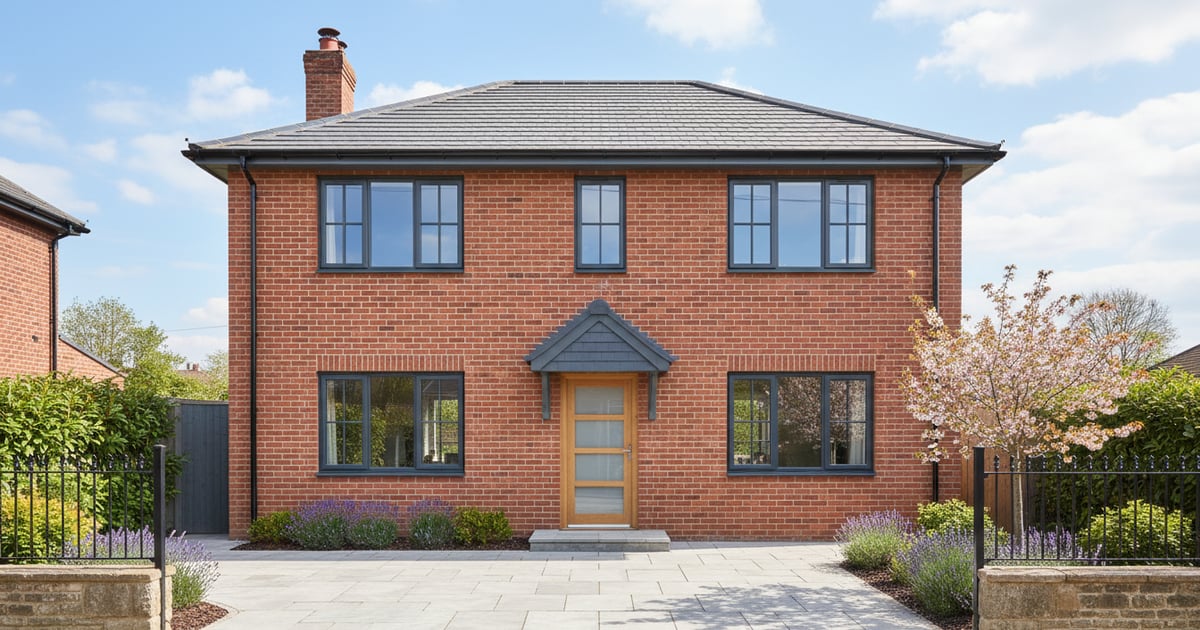
Full House Renovation Costs in Yorkshire and the Humber

Full House Renovation Costs in Yorkshire and the Humber

Estimates derived from UK trade benchmark data and regional labour indices, updated May 2026. Methodology →

Full House Renovation in Yorkshire and the Humber benefits from healthy competition among trades, which often keeps totals below the UK average. These ranges still trace back to the same national guide — just read for Yorkshire and the Humber.

In Yorkshire and the Humber, competition among trades often keeps total renovation costs below average. For the full UK-wide baseline, compare with Full House Renovation Cost UK.

Two ways to take action on full house renovation costs

Pick the path that fits where you are — running early numbers, or pressure-testing a quote you've already got.

Typical Yorkshire and the Humber full house renovation budgets

Three planning tiers for full house renovation in Yorkshire and the Humber, with scope and a representative figure for each. Run your own numbers in the calculator for a tailored range.

Budget

£33,500

  • Essential electrics
  • Basic kitchen
  • Bathroom replacement
Mid-rangeMost common

£72,000

  • Full modernisation across services
  • Finishes
  • Selective layout adjustments
Premium

£163,000

  • Structural reconfiguration
  • Premium kitchen
  • Bathrooms

Typical regional cost ranges

ItemCost Range
Light cosmetic renovation£19,200 – £38,500
Medium renovation£38,500 – £77,000
Full structural renovation£77,000 – £144,000
Rewiring (3-bed)£2,900 – £5,800
Central heating system£2,900 – £7,700

Indicative range: £500£1,900 per m².

Mini full house renovation cost calculator

Three quick inputs and we'll email you an indicative range. Run the full calculator for a postcode-adjusted estimate.

Total habitable floor area to be renovated

Unit:

Email me my estimate

We'll send the indicative range straight to your inbox.

We'll email your estimate to this address regardless. Privacy policy.

What's included in Yorkshire and the Humber full house renovation costs

  • Property size — a 2-bed flat is far cheaper to renovate than a 4-bed detached house.
  • Current condition — properties needing structural work, damp treatment, or asbestos removal cost significantly more.
  • Specification level — basic, mid-range, or premium finishes across all rooms.
  • Electrical and plumbing — full rewires and re-plumbs are expensive but often essential in older homes.
  • Structural changes — removing walls, adding steels, and altering layouts.
  • Kitchen and bathroom — these rooms account for the largest share of renovation budgets.
  • Location — London renovations cost 20–40% more than the national average.

5 line items every fair full house renovation quote should include

Use this checklist to spot missing scope before you sign — each item names what should be priced and what to ask for if it isn't.

  1. 1

    Professional fees (architect, structural engineer, project management)

    Whole-house renovations need: architect drawings if any layout changes (£3,000-£12,000), structural engineer for load-bearing walls (£800-£3,000), project manager if not self-managing (10-15% of build), planning consultant if needed (£800-£3,000). These are 8-15% of build cost and typically MISSING from per-m² estimates online.

    Fair UK range: 8-15% of total build cost on whole-house renovations.

    Ask: Are professional fees included as separate line items, and if so, which professionals are involved?

  2. 2

    Strip-out + waste disposal + asbestos handling

    Removing kitchens, bathrooms, flooring, ceilings (often), and old services. Plus skip hire, waste transfer notes, and asbestos surveys (mandatory before renovation work on pre-2000 properties). Vague 'preparation' lines hide this.

    Fair UK range: £3,000-£12,000 on a typical whole-house strip-out; +£1,200-£4,000 if asbestos found.

    Ask: What's included in strip-out, and have you allowed for asbestos survey + handling on a property of this age?

  3. 3

    Services overhaul — electrics + plumbing + heating

    Properties >25 years usually need: full rewire (NICEIC certified) £4,500-£8,500, replumb if pipework old £3,000-£6,000, new consumer unit (Part P) £600-£1,200, new boiler £2,000-£3,500, possibly new central heating system £4,000-£7,000.

    Fair UK range: £10,000-£20,000 for full services overhaul on a typical 3-bed house.

    Ask: Are full rewire/replumb included, and is the electrician NICEIC/NAPIT, plumber Gas Safe?

  4. 4

    Kitchen + bathrooms (typically 30-40% of total budget)

    Kitchen and 1-2 bathrooms account for £15,000-£40,000+ on most renovations. The kitchen alone is typically 18-22% of total project cost. A fair quote separates: units, worktops, appliances, taps/sinks, fitter labour for each room.

    Fair UK range: Kitchen £8,000-£25,000+; each bathroom £5,000-£12,000 mid-range.

    Ask: Can you break out kitchen and each bathroom into units, fixtures, fittings, and labour separately?

  5. 5

    Decoration + flooring + finishes (the visible 5-15% of budget)

    Plaster repairs and skim coats throughout (£2,500-£6,000), flooring (£3,000-£12,000), painting (£3,000-£8,000), woodwork. Often squeezed at end of budget — leading to half-finished or low-spec finishes.

    Fair UK range: £10,000-£30,000 for full house decoration + flooring depending on size and finish level.

    Ask: What flooring spec is included, what paint brand, and what's the contingency to upgrade specific areas?

Want this run on your actual full house renovation quote? Upload it and our AI Quote Checker flags missing line items, overcharges and the questions worth asking.

Check my quote

7 red flags that mean you might be overcharged on a full house renovation quote

UK-specific signals — each red flag explains why it matters and the question that surfaces the truth.

  • Quote significantly below £1,200/m² for standard whole-house renovation

    Why it matters: UK 2026 typical for standard full-house renovation is £1,400-£2,200/m² inc VAT. Below £1,200/m² usually means: missing professional fees, no contingency, no rewire/replumb, cheap kitchen/bathroom, or 'extras' will push the final bill 30-50% above quote.

    Ask: Can you walk me through how you've achieved this price? What's included for rewire, kitchen spec, and contingency?

  • No contingency mentioned in the budget

    Why it matters: Every whole-house renovation uncovers issues. Asbestos, rotted joists, failed services, hidden damp. If your contractor doesn't mention contingency, they're either inexperienced or planning to hit you with extras as 'unforeseen'.

    Ask: What contingency do you recommend, and how is it drawn down during the project?

  • No JCT contract proposed for £100k+ renovation

    Why it matters: On a £100-£300k whole-house renovation, working without a JCT Minor Works contract or equivalent is reckless. There's no defined payment schedule, no variation procedure, no dispute mechanism — just trust on a six-figure project.

    Ask: Will you work to a JCT Minor Works contract? If not, what written agreement defines payment, variations, and disputes?

  • Single trader claiming to do all trades

    Why it matters: A whole-house renovation needs at least 6 specialist trades: builder, electrician (NICEIC), plumber (Gas Safe if heating), kitchen fitter (KBSA), structural engineer (IStructE), decorator. One person doing all of these is unqualified for at least some.

    Ask: Who specifically handles electrics, gas/heating, structural calculations, and kitchen fitting? Are they all properly certified?

  • VAT treatment unclear or no mention of empty-home reduced rate

    Why it matters: If your property has been empty 2+ years, you may qualify for 5% VAT instead of 20%. On a £200k project, that's £30,000 saved. Most contractors don't mention it. If your contractor doesn't ask about empty-home status, raise it yourself.

    Ask: Is this property eligible for the 5% reduced VAT rate (empty homes), and have you confirmed treatment in writing?

  • No allowance for asbestos / unknowns on pre-1980s properties

    Why it matters: Pre-1980 properties often contain asbestos in: artex ceilings, floor tiles, pipe lagging, soffits. Removal requires licensed contractors and adds £1,200-£4,000+. Pre-1900 properties often have lath-and-plaster ceilings needing full replacement, not patch repair.

    Ask: Have you allowed for asbestos survey and potential removal? On a property this age, what other unforeseens are likely?

  • No mention of disruption planning if living in property

    Why it matters: Living in a whole-house renovation is brutal. Reputable contractors discuss: dust separation, services availability (water, heating, kitchen), access, security overnight. Vague answers mean you'll be without running water for weeks unexpectedly.

    Ask: If I'm living here during the work, how will you maintain water, heating, kitchen access, and bathroom availability throughout?

Spot a couple of these on your full house renovation quote? Upload it for a full red-flag scan and fair-rate comparison.

Check my quote

How to negotiate a full house renovation quote

A simple framework, a verbatim script you can paste into an email or text, and the topic-specific levers that move the price.

Framework

  1. 1Get three quotes from FMB-registered or TrustMark-accredited contractors. Each must visit the property (phone-only quotes are worthless on a £100k+ project) and quote on identical scope: same rooms, same finish level, same structural changes, same contingency level.
  2. 2Demand itemised breakdowns covering: surveys/fees, strip-out, structural/shell, services (electrics/plumbing/heating), kitchen, each bathroom, flooring, decoration, contingency, VAT. Reject single-total or 'all-inclusive' quotes — too easy to hide thin work.
  3. 3Identify the median per major line. The total spread on whole-house renovations is often £30-£100k across three quotes — meaningless. The line-item spread shows you who's lowballing the kitchen or padding the structural work.
  4. 4Insist on a JCT Minor Works contract. This caps payment terms, defines variations, gives legal recourse on a six-figure project. Stage payments tied to verifiable milestones (no calendar-based payments). 5-10% retention held back 6-12 months.

Verbatim script

I've had three quotes for this whole-house renovation. Yours is competitive overall, but the strip-out and services lines are £X above the median I've received from two other FMB-registered contractors, and the kitchen line is £Y below. The other quotes specify [comparable kitchen spec] and budget £Z for asbestos contingency. Can you walk me through what's included in your services pricing, confirm the kitchen spec is comparable, and let me know if you'll work to a JCT Minor Works contract with stage payments tied to milestones?

Topic-specific levers

  • Self-management vs project manager: PM markup is 10-15% of build (£10-£20k on a £100k project). If you have time and basic construction literacy, self-managing saves significantly but requires 5-10 hours/week.
  • Phasing the renovation: doing all-at-once saves ~20% (single mobilisation, single sequence) vs phased. But phasing spreads cash flow and lets you live in finished portions. Phased = £30-60k chunks; all-at-once = £150k+ upfront.
  • Empty-home VAT: if property has been empty 2+ years, register with HMRC for 5% rate instead of 20%. Save £15-30k on a typical project.
  • Spec downgrade on hidden items: PIR insulation vs mineral wool, mid-range vs premium kitchen, IKEA Bespoke vs custom — choose where to spend visibly and save on what no one sees.
  • Sequence trades smartly: rewire/replumb BEFORE plastering. Kitchen ordered with 8-week lead time. Bad sequencing adds 30%+ to project duration.

Want to know which line items on your full house renovation quote are above market before you negotiate? Upload it for a fair-rate comparison.

Check my quote

10 questions to ask before hiring a main contractor / project manager

Vet on competence, insurance, paperwork and process — not price alone. Each question spells out the answer you want and why.

  1. 1. Are you a member of the FMB (Federation of Master Builders), TrustMark, or NHBC?

    Why it matters: FMB and TrustMark vet contractors on workmanship and finances. They typically offer Insurance-Backed Warranties. Membership is verifiable on each body's public register.

  2. 2. Can you show me 2-3 completed whole-house renovations from the last 18 months, with homeowner contact details?

    Why it matters: Whole-house renovations are large complex projects. Recent local references let you visit actual work and ask homeowners about variations, communication, snagging, and project management.

  3. 3. Who handles each major trade — structural, electrics, plumbing, gas, kitchen?

    Why it matters: A whole-house renovation needs at least 6 specialist trades, all certified. NICEIC/NAPIT for electrics, Gas Safe for gas, IStructE for structural, KBSA for kitchen. A single trader doing all of these is unqualified for at least some.

  4. 4. What contract are you proposing — JCT Minor Works, JCT Home Owner, or your own terms?

    Why it matters: JCT contracts are industry standard for renovation work. They define payment schedule, variation procedure, dispute resolution. For projects over £30k, JCT is essentially mandatory.

  5. 5. What's your payment schedule, and what milestones trigger each stage?

    Why it matters: Stage payments tied to verifiable milestones (strip-out complete, weather-tight, first fix complete) protect you if the contractor goes bust. Calendar-based payments don't. Industry norm: 5-10% retention held back 6-12 months.

  6. 6. Will you handle Building Regs application, Building Control inspections, and any planning permissions?

    Why it matters: Renovations triggering structural work or services upgrades need Building Regs notification. Reputable contractors handle this; cowboys 'forget' to apply, leaving you with non-compliant work.

  7. 7. What's your contingency recommendation, and how is it drawn down?

    Why it matters: Industry norm: 10-15% contingency, held by you, drawn down only with written approval after specific issues are identified. 'We'll just see' is not a contingency policy.

  8. 8. How will you handle disruption if I'm living in the property?

    Why it matters: Living in a renovation requires planning: dust separation, service availability, security overnight, access for kids/pets. Vague answers mean misery.

  9. 9. What's the warranty on the workmanship, and is it insurance-backed?

    Why it matters: Industry norm: 10-year insurance-backed warranty for structural work; 12-24 months for other workmanship. For larger projects, an IBG (FMB IBG, BuildSure) is essential.

  10. 10. Are you VAT registered, and what's your public liability cover?

    Why it matters: VAT registration matters for invoicing and warranty enforcement. Public liability of £5M minimum is industry norm for £100k+ projects.

Already chosen a main contractor / project manager and got a quote? Run it through our Quote Checker before you commit.

Check my quote

Ready to act on your full house renovation project?

Whether you're still scoping or already comparing builders, the next step is one click away.

Compare other regions

Frequently asked questions

Want the UK-wide picture for full house renovation?

See national cost ranges, scenarios and timelines without the regional adjustment.

Compare full house renovation costs across the UK