£1,350
- Focused essentials
- Practical finishes
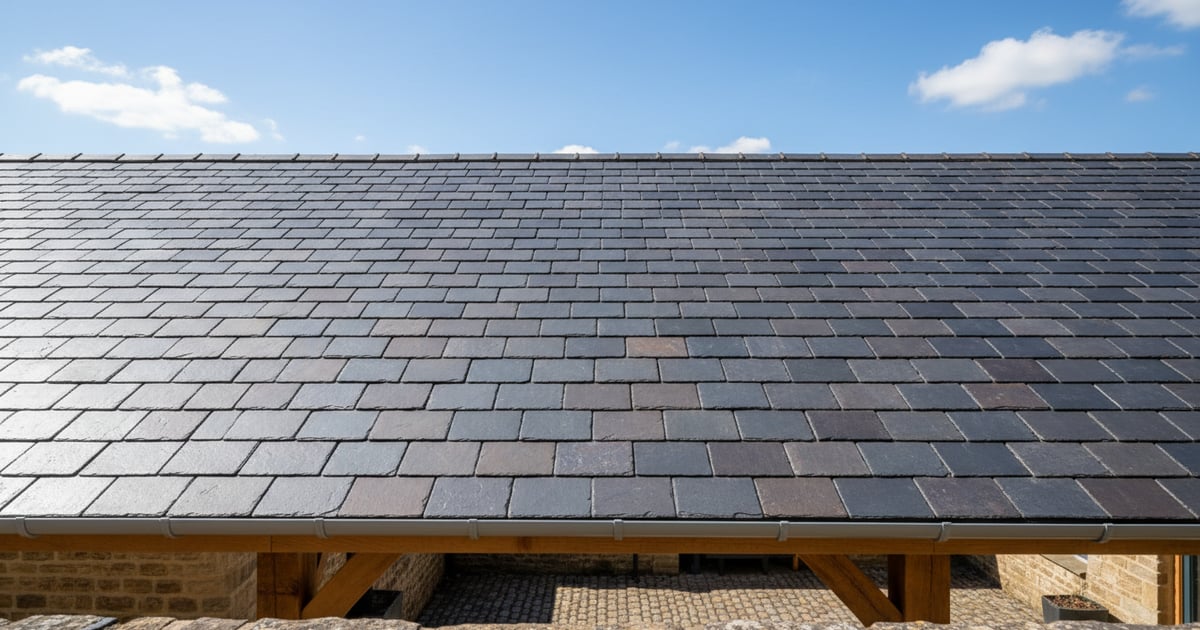
Estimates derived from UK trade benchmark data and regional labour indices, updated May 2026. Methodology →
Roof Repair in East of England often sits a touch above the UK average, particularly around larger towns and growth pockets. You will still see the same spec bands as the national guide — just read for this region.
In East of England, pricing often sits slightly above the national average, especially in larger towns and growth areas. For the full UK-wide baseline, compare with Roof Repair Cost UK.
Pick the path that fits where you are — running early numbers, or pressure-testing a quote you've already got.
Postcode + project scope → tailored UK cost range in 60 seconds.
Open the calculatorAlready got a builder's quote? We flag overcharges and missing scope.
Open the Quote CheckerUpload your Home Report or homebuyer survey for a plain-English analysis.
Open the Home Report AnalyserThree planning tiers for roof repair in East of England, with scope and a representative figure for each. Run your own numbers in the calculator for a tailored range.
£1,350
£3,200
£10,300
| Item | Cost Range |
|---|---|
| Replace slipped/broken tiles | £150 – £550 |
| Ridge tile repointing | £300 – £850 |
| Flat roof repair (patch) | £200 – £650 |
| Flat roof replacement | £1,600 – £5,300 |
| Full re-roof (pitched) | £5,300 – £15,900 |
Three quick inputs and we'll email you an indicative range. Run the full calculator for a postcode-adjusted estimate.
Use this checklist to spot missing scope before you sign — each item names what should be priced and what to ask for if it isn't.
For any work above single-storey eaves height, scaffolding is a Working at Height Regulations requirement — not optional. The line should state the duration (typically 1–4 weeks for a re-roof), erection/dismantle cost, and weekly hire rate. A roofer who proposes to work from a ladder on an accessible 2-storey roof is breaching HSE guidance and saving you nothing — they're increasing your liability if they fall on your property.
Fair UK range: £500–£1,500 for an average 2-storey terrace or semi (front and back). Town houses and detached properties can run £1,500–£3,500.
Ask: Is scaffolding itemised separately, who is the scaffolding firm, and how long is it allowed for?
On a full strip-and-recover, the felt or breathable membrane and timber battens beneath the tiles must be replaced — not just the visible tiles. A modern breathable membrane (e.g. Klober Permo, Cromar Vent 3) is now standard and required for new BS 5534 compliance. A quote for a 'full re-roof' that doesn't mention membrane and battens is missing the most important structural layer.
Fair UK range: £12–£20 per m² for breathable membrane and treated battens combined, supply and fit.
Ask: Which membrane and batten spec are you using, and is it BS 5534 compliant?
A fair quote names the tile or slate type (concrete interlocking, plain clay, natural slate, fibre-cement), the brand if applicable (Marley, Redland, SSQ Riverstone), and the quantity in m² with a stated breakage allowance (5–10%). Salvaged or matched tiles for a partial repair should be priced separately — sourcing a discontinued match can be 2–3x the cost of new stock.
Fair UK range: Concrete interlocking tiles £35–£60/m² supplied; natural slate £80–£140/m² supplied; clay plain tiles £60–£110/m² supplied.
Ask: Exact tile type, brand and quantity in m² — and what's the breakage allowance you've allowed for?
Where the roof meets a wall, chimney or dormer, lead flashings are the waterproof seal. New lead must be Code 4 or Code 5 to BS EN 12588, with a minimum 150mm upstand. Cement fillets in place of proper lead is a 5-year fix, not a 30-year one. Lead work needs Lead Sheet Association (LSA) trained installers — bodged lead is the #1 source of post-roofing leaks.
Fair UK range: £60–£120 per linear metre for new Code 4/5 lead flashing fitted; chimney complete re-leading £400–£900.
Ask: Are flashings being replaced in Code 4/5 lead to BS EN 12588, and is the installer LSA-trained?
Stripping a 100m² roof generates 6–10 tonnes of waste — mostly broken tile and old felt. The quote should cover skip hire (or grab lorry on bigger jobs), waste transfer notes (a legal requirement, your liability if not held), and any disposal of suspected asbestos cement (some 1960s–80s flat roofs and underlays). Asbestos disposal must be handled by a licensed contractor and is materially more expensive than standard waste.
Fair UK range: £250–£600 for skip hire and disposal on a typical re-roof. Asbestos: add £400–£1,200 if present.
Ask: Is skip hire and waste transfer included, and have you assessed for asbestos in any existing materials?
Want this run on your actual roof quote? Upload it and our AI Quote Checker flags missing line items, overcharges and the questions worth asking.
UK-specific signals — each red flag explains why it matters and the question that surfaces the truth.
Why it matters: This is the single biggest fraud signal in UK roofing. Reputable roofers don't doorstep, don't pressure, and don't offer cash discounts in lieu of a VAT invoice. Cash-only forfeits your consumer protection under the Consumer Rights Act 2015, voids most insurance-backed warranties, and means you have no come-back if the work fails. Trading Standards data consistently puts roofing at the top of doorstep-fraud categories.
Ask: I'd like a written, VAT-registered quote with a 14-day cooling-off period — can you provide that?
Why it matters: Scaffolding is a legal requirement for sustained work at height under the Work at Height Regulations 2005. A roofer offering to ladder-work a 2-storey roof is either uninsured (so you'd carry liability if they fall), or planning unsafe practices that lead to rushed, low-quality work. Either way, the saving is not real — you're trading £600 of scaffold for thousands of pounds of risk.
Ask: Where is scaffolding in this quote, and which scaffold firm will you be using?
Why it matters: A lifetime warranty from a sole trader is worth nothing the day they retire, go bust or change company name (a routine tactic). Real warranties are insurance-backed via NFRC's MasterCertificate or CompetentRoofer's IBG (Insurance-Backed Guarantee), so they pay out even if the firm vanishes. 'Lifetime' on the leaflet, no insurance certificate behind it, means a sticker not a guarantee.
Ask: Is the warranty insurance-backed, and can I see the IBG certificate or NFRC MasterCertificate?
Why it matters: The membrane and battens are 70%+ of the wind-resistance and waterproofing performance of a modern roof — the tiles are the visible layer. A 'full re-roof' quote that just lists tiles is either re-using the existing 30-year-old felt (will fail in 5 years) or hiding the cost in a vague 'sundries' line. BS 5534 (2014, updated 2018) is the binding standard.
Ask: Which BS 5534-compliant membrane and what batten size/treatment are you specifying?
Why it matters: Roof coatings (typically acrylic or polyurethane sprays) are widely sold as a re-roofing alternative, but the NFRC, RICS and Which? have all warned against them on traditional pitched roofs. They can trap moisture in the substrate, void manufacturer tile warranties, and create cosmetic damage that the next homeowner has to strip back. If a roof genuinely needs re-roofing, a coating won't fix it; if it doesn't, you don't need it.
Ask: Why are you proposing a coating instead of replacing the failed components, and will it void my tile manufacturer warranty?
Why it matters: On roofing, 'making good' usually means lead flashings, chimney pointing, gutter refit, and ventilation tile installation — items that should each be priced separately. Bundling them lets the roofer either skip them (and you find out at the first storm) or charge as 'extras' mid-job. A 50m² re-roof typically has £600–£1,500 of legitimate making-good work; if it's hidden in a single line, you can't audit it.
Ask: Can you itemise everything in 'making good' — flashings, ventilation tiles, gutter refit, pointing — with individual prices?
Why it matters: Roofing in the UK is unregulated — anyone can call themselves a roofer. NFRC membership requires assessed competence, evidence of insurance, and a complaints process. CompetentRoofer is the government-authorised competent person scheme allowing self-certification of Building Regs compliance (mandatory on more than 50% roof renewal). Without one of these and a current £2M+ public liability certificate, you have no fallback if things go wrong.
Ask: Are you NFRC or CompetentRoofer registered, and can I see your current public liability insurance certificate?
Spot a couple of these on your roof quote? Upload it for a full red-flag scan and fair-rate comparison.
A simple framework, a verbatim script you can paste into an email or text, and the topic-specific levers that move the price.
Thanks for the quote. I've had two other written quotes for the same scope — same tile spec, same membrane, same scaffolding period. Yours is competitive overall but it's about £X above the median on labour days, and £Y above on scaffolding. The other quotes are from [firm names if comfortable, or 'similarly NFRC-registered firms']. Can you walk me through what's behind those two line items, or match the median if it's the same scope?
Want to know which line items on your roof quote are above market before you negotiate? Upload it for a fair-rate comparison.
Vet on competence, insurance, paperwork and process — not price alone. Each question spells out the answer you want and why.
Why it matters: Both schemes assess competence, require insurance and offer insurance-backed guarantees. CompetentRoofer also lets the roofer self-certify Building Regs compliance for jobs over 50% roof area — saving you a separate Building Control inspection.
Why it matters: Roofing damage to your property, neighbours, or passers-by is a real risk. £2M is industry minimum; £5M is increasingly the norm for any work involving scaffolding. The certificate must be current — ask for the date and insurer name, not just a yes/no.
Why it matters: Working at height is the leading cause of construction fatalities in the UK. Trained operatives are insured for height work; untrained ones aren't, and your home insurance won't cover an injury claim from an untrained worker on your roof.
Why it matters: Bad lead work is the #1 source of post-roofing leaks. LSA-trained installers know thermal expansion gaps, correct dressing, and proper detail at chimneys and abutments. Cement fillets and bodged lead are a 3-year fix masquerading as 30-year work.
Why it matters: Roofing failures often only appear 18–24 months in (a wet winter), so older references can mislead. Recent local references let you actually drive past the work, see the condition, and sometimes speak to the homeowner.
Why it matters: Once tiles go back on, you can never see the work below. Reputable roofers proactively photograph the structural layers; reluctant ones may be planning to skip steps. This is the single best quality-assurance ask in roofing.
Why it matters: Industry standard is 10–25 years on workmanship, separate from the manufacturer's tile/membrane warranty. Insurance-backed means it survives the firm closing — non-insurance-backed warranties are worthless after the firm goes bust (a routine occurrence in roofing).
Why it matters: On any re-roof there's a real chance of rotten rafter ends, broken battens or wet rot in roof timbers. You want a stated extra-works rate (e.g., '£X per linear metre for sister-rafter repair, agreed and photographed before any work') — not open-ended T&M.
Why it matters: UK norm: small material deposit (10–20%), staged payments after inspection milestones for big jobs, balance on completion. Anything over 25% upfront is a structural risk. VAT registration is also essential for warranty enforcement and a sign of a real trading business.
Why it matters: Building Regs Part L applies to any work over 25% of any single roof slope (energy efficiency / insulation upgrade often required). CompetentRoofer-registered firms can self-certify, saving you £200–£400 in Building Control fees and the time delay.
Already chosen a roofer and got a quote? Run it through our Quote Checker before you commit.
Whether you're still scoping or already comparing builders, the next step is one click away.
Postcode + project scope → tailored UK cost range in 60 seconds.
Open the calculatorAlready got a builder's quote? We flag overcharges and missing scope.
Open the Quote CheckerUpload your Home Report or homebuyer survey for a plain-English analysis.
Open the Home Report AnalyserSee national cost ranges, scenarios and timelines without the regional adjustment.
Compare roof repair costs across the UK