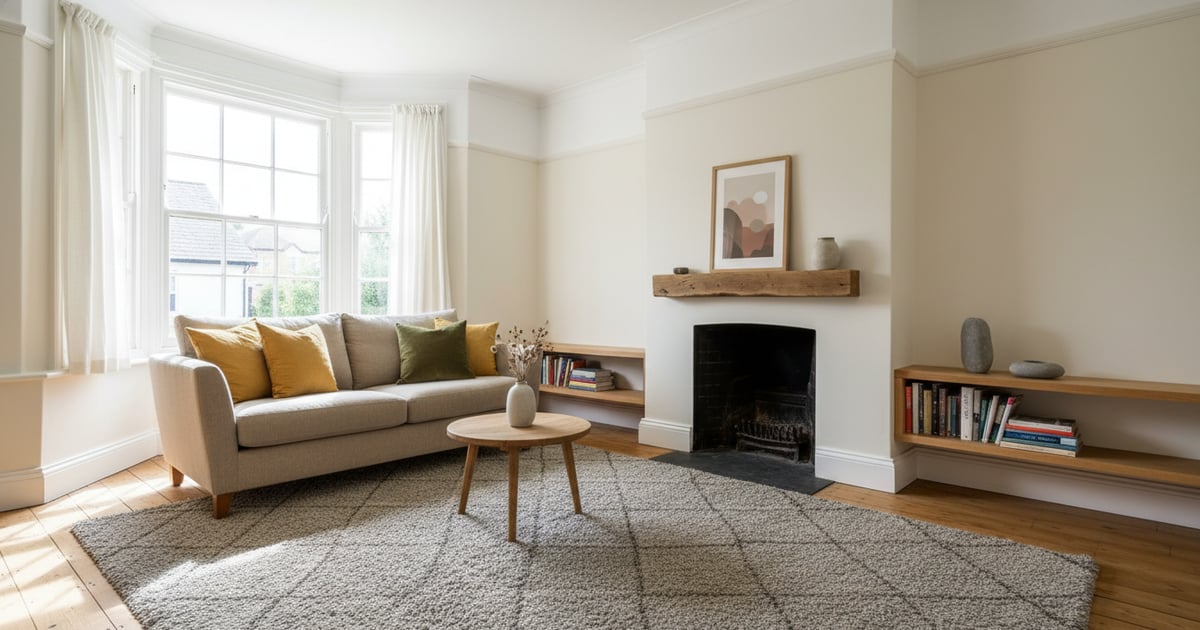
Cheapest Home Renovations UK
Find the highest-ROI cheapest renovations in 60 seconds — and avoid the false economies that cost more long-term.
Estimates based on UK trade benchmark data, updated 2 May 2026. Methodology →
Not every improvement needs a big budget. The most affordable UK home renovations focus on high-impact, lower-cost changes: painting and decorating, flooring refresh, lighting, garden tidy-up, basic bathroom refresh, and kitchen facelifts (new doors, worktops, or paint). This guide covers realistic costs for low-cost upgrades in 2026 so you can prioritise what delivers the best value for money.
Most projects fall between £2,550 and £3,450. Budget refreshes start near £228; premium projects reach up to £10,080.
Two ways to take action on Cheapest Renovations costs
Pick the path that fits where you are — running early numbers, or pressure-testing a quote you've already got.
Typical UK Cost by Scenario
Typical timeline: 1 day to 3 weeksBudget
£1,314
typical figure
- Focused essentials
- Practical finishes
Mid-range
Most common£3,000
typical figure
- Balanced specification with core upgrades
- Reliable materials
Premium
£6,840
typical figure
- Premium materials
- Wider scope with higher coordination demands
Figures are typical UK averages including labour, materials, and VAT at 20% for standard-rated work.
Save money on your quote
Already got a quote from a builder?
Upload it and our AI Quote Checker flags overcharges, missing scope, and the questions worth asking — in about a minute.
Typical UK Cost Ranges for Cheapest Renovations
| Item | Cost Range |
|---|---|
| Paint one room (DIY) | £60 – £180 |
| Paint one room (decorator) | £240 – £600 |
| Laminate or LVT (one room) | £360 – £1,080 |
| New lighting (few fittings) | £180 – £720 |
| Garden tidy (weeding, mulch, planters) | £240 – £960 |
| Bathroom refresh (suite replace, same layout) | £1,800 – £5,400 |
| Kitchen facelift (doors + worktop) | £1,200 – £4,200 |
All prices are approximate UK averages including labour, materials, and VAT at 20% (2026). Some qualifying renovations for empty homes may use the reduced 5% VAT rate.
Mini Cheapest Renovations cost calculator
Three quick inputs and we'll email you an indicative range. Run the full calculator for a postcode-adjusted estimate.
Real UK Cost Examples
- Budget scenario (4-bed detached, Glasgow): focused essentials and practical finishes. Not done: major layout or structural changes. Approx cost: £190 to £2,000.
- Mid-range scenario (typical homeowner, bungalow): balanced specification with core upgrades and reliable materials. Approx cost: £2,125 to £2,875.
- High-end scenario (2-bed flat): premium materials and wider scope with higher coordination demands. Main cost drivers: specification level and complexity. Approx cost: £3,000 to £8,400.
Related next steps:
What You Can Get For Your Budget
- Around £1,750: core refresh and essential upgrades, usually with no major layout change.
- Around £2,500: balanced refit scope with better materials and targeted performance improvements.
- £3,750+: wider flexibility on finish quality, scope depth, and more complex works.
Hidden Costs to Watch For
- Access constraints, parking, and logistics frequently raise final labour costs in UK projects.
- Waste removal, making-good, and repeat trade visits are common late-budget increases.
- Compliance and certification items are often missing from initial summary quotes.
- In most UK projects, scope changes after works start are where costs escalate fastest.
Related next steps:
Should You Do This Renovation?
- Usually worth it when low-cost upgrades fix obvious wear that would otherwise dominate buyer surveys or snag lists.
- Less worth it when the main issue is cosmetic and resale timing is short-term.
- ROI is strongest when scope is disciplined and specification matches local value levels.
Common Cost Mistakes
- Underestimating labour and preliminaries while focusing only on material prices.
- Changing scope mid-project without budget re-baselining.
- Choosing the cheapest quote without checking detailed inclusions and exclusions.
- Running too little contingency for hidden defects and compliance upgrades.
Key Cost Factors
- Painting — biggest visual impact for lowest cost; DIY saves labour.
- Flooring — laminate or LVT in one or two rooms is affordable; whole house scales up.
- Lighting — new pendants and lamps change feel; electrician for hardwired changes.
- Garden — weeding, mulch, planters, and a mown lawn improve kerb appeal cheaply.
- Bathroom — refresh not full refit: new suite in same position, retile, regrout.
- Kitchen — new doors and worktops only (carcasses sound) is far cheaper than full refit.
Cost Checkpoints
Use these checkpoints to sequence spend decisions, protect your core scope, and reduce late-stage budget overruns.
- Prioritise bathroom refresh (suite replace, same layout) first: typical range £1.8k to £5.4k can shift the whole project budget if scope changes late.
- Prioritise kitchen facelift (doors + worktop) next: typical range £1.2k to £4.2k can shift the whole project budget if scope changes late.
- Use £2.5k as a working midpoint and hold a contingency of roughly 10% to 15% for unknowns and making-good works.
- Request like-for-like quotes with labour, materials, and exclusions split out so you can compare options without hidden scope gaps.
5 line items every fair Cheapest Renovations quote should include
Use this checklist to spot missing scope before you sign — each item names what should be priced and what to ask for if it isn't.
- 1
Kitchen refresh — paint cabinets, replace handles + worktop, retain layout
Full kitchen replacement £8k-£18k. Refresh: paint existing cabinets (£200-£500 in materials), new handles (£50-£200), replace worktop only (£800-£2,500), new tap and splashback (£200-£500). Total £1,250-£3,700 for a transformed kitchen.
Fair UK range: £1,250-£3,700 for kitchen refresh that looks like a new kitchen.
Ask: Can the existing carcases stay, or do hinges/runners need replacing? That's the deciding factor between refresh vs replace.
- 2
Bathroom refresh — retile feature wall, replace taps + accessories, regrout
Full bathroom replacement £5k-£12k. Refresh: retile one feature wall (£400-£1,000), regrout existing tiles (£200-£600), replace taps + showerhead (£150-£500), new toilet seat + accessories (£100-£300), retain bath + basin + WC. Total £850-£2,400.
Fair UK range: £850-£2,400 for bathroom refresh that doesn't require ripping out plumbing.
Ask: Are existing fixtures (bath, basin, toilet) in good working condition? If yes, refresh works. If failing, replace makes sense.
- 3
Decoration — paint walls + ceilings + woodwork throughout
Single biggest visual impact for the money. Whole 3-bed house: £1,800-£3,500 by professional decorator (DIY: £400-£800 in materials only). Use trade-grade paint (Dulux Trade, Crown Trade) — better coverage, longer-lasting.
Fair UK range: £1,800-£3,500 professional whole-house decoration; £400-£800 DIY materials only.
Ask: Trade-grade paint or retail? Trade is 30% more expensive per litre but lasts 7-10 years vs 3-5 for retail.
- 4
Loft insulation upgrade
Best ROI improvement on most UK homes. Topping up existing 100mm loft insulation to current 270mm Part L standard: £400-£900 (DIY £150-£300 in materials). Saves £200-£500/year on heating bills. Payback 2-4 years. ECO4 grant may cover for low-income households.
Fair UK range: £400-£900 professional install; £150-£300 DIY material cost.
Ask: What's the existing depth? If less than 200mm, upgrade pays for itself in 2-4 years.
- 5
Flooring refresh — sand + restain hardwood, or replace carpet
Hardwood/parquet sanding + restain: £30-£60/m² (saves £25-£50/m² vs replacement). Carpet replacement: £25-£60/m² mid-range (avoid ultra-cheap £15/m² — fails in 3 years). LVT click-fit DIY-able: £20-£40/m² material cost.
Fair UK range: Sand existing hardwood £30-£60/m²; carpet replacement £25-£60/m²; LVT DIY £20-£40/m² materials.
Ask: Is existing flooring solid wood under carpet? Sanding saves vs replacement and adds value.
Want this run on your actual Cheapest Renovations quote? Upload it and our AI Quote Checker flags missing line items, overcharges and the questions worth asking.
7 red flags that mean you might be overcharged on a Cheapest Renovations quote
UK-specific signals — each red flag explains why it matters and the question that surfaces the truth.
Cheap kitchen replacement (under £4k full kitchen)
Why it matters: Sub-£4k full kitchen replacements use cheap chipboard carcases (15mm vs 18mm), basic hinges that fail in 3 years, paper-thin laminate worktops. False economy — you'll be replacing again in 5-7 years. Either refresh existing properly OR spend £8k+ on a quality replacement.
Ask: Why so cheap? Cheap kitchens fail fast. What's the carcase thickness, hinge brand, and worktop material?
Bathroom refresh that includes plumbing relocations
Why it matters: If you're moving plumbing, you've crossed from refresh into refurbishment. Costs jump from £2k to £5k+. A 'refresh' quote that involves moving the toilet or basin is mislabelled.
Ask: Are you moving any plumbing? If yes, this is a refurbishment, not a refresh — price accordingly.
Retail-grade paint specified for whole-house decoration
Why it matters: Retail paint (Dulux Easycare £15/L) is 50% cheaper than trade paint (Dulux Trade Diamond £45/L) but lasts half as long and gives worse coverage. False economy — you'll repaint in 3 years vs 7-10. Trade paint pays back over time.
Ask: Is the paint trade-grade? Specifically — Dulux Trade, Crown Trade, or Mylands? Retail paint is false economy.
Carpet under £20/m² installed
Why it matters: Sub-£20/m² installed carpet uses cheap synthetic fibres that mat down within 12 months and fail in 3-4 years. Mid-range £30-£50/m² installed (Cormar, Brockway) lasts 10-15 years. False economy — replace in 4 years vs 12.
Ask: What carpet brand and grade? Cormar, Brockway, Westex are reputable mid-range — avoid £15/m² imports.
DIY plumbing or electrical work
Why it matters: DIY electrical work in kitchens or bathrooms is illegal under Part P (must be NICEIC/NAPIT certified). DIY plumbing on hot water/heating systems is illegal under Gas Safe. Insurance won't cover defects. False savings — spend the £200-£500 for a certified electrician.
Ask: Is the electrical work in scope? It must be Part P notifiable by NICEIC/NAPIT-registered electrician — not DIY.
No insulation upgrade in 'energy efficiency' refurb
Why it matters: If your goal is energy efficiency (heating bill savings), loft insulation has the best ROI of any single improvement. Cavity wall insulation (if uninsulated, £400-£800) is second best. Quotes that focus on new windows over insulation are addressing the wrong problem first.
Ask: What's the existing insulation level (loft + cavity walls)? Insulation upgrade has better ROI than new windows on most UK homes.
Quote prioritises bedrooms before kitchen/bathroom
Why it matters: On resale, kitchen + bathroom are the two rooms that drive value. Spending £8k on bedroom decoration before renovating a tired kitchen is poor capital allocation if value uplift is the goal. Spend the priority budget on the value-driving rooms first.
Ask: What's the goal — quality of life now, or value uplift at sale? The answer changes the priority order.
Spot a couple of these on your Cheapest Renovations quote? Upload it for a full red-flag scan and fair-rate comparison.
How to negotiate a Cheapest Renovations quote
A simple framework, a verbatim script you can paste into an email or text, and the topic-specific levers that move the price.
Framework
- 1Rank cheap improvements by ROI: (1) loft insulation upgrade (best — payback 2-4 years), (2) kitchen refresh (high visual impact), (3) bathroom refresh (high visual impact), (4) whole-house decoration with trade paint, (5) flooring refresh (sand + restain or quality carpet replacement).
- 2Get one quote for everything bundled, plus separate quotes for each component (decoration, flooring, kitchen refresh, bathroom refresh). Often, separate trades cost less than a single contractor's mark-up.
- 3Identify what you can DIY: paint walls/ceilings (saves £1,200-£2,500 on whole-house), simple flooring like LVT click-fit (saves £20-£40/m²), basic kitchen refresh (cabinet painting + handle replacement). DON'T DIY: electrics, plumbing, gas, structural.
- 4Sequence smartly: insulation first (saves money on heating during the renovation), kitchen + bathroom second (highest visual impact), decoration last (covers up access damage from earlier work).
Verbatim script
I'm looking to refresh this house on a budget of £X. My priorities are kitchen, bathroom, and decoration. I'd like a single contractor for the kitchen + bathroom refresh, but I'm planning to DIY the decoration and source flooring myself. Can you give me line-item quotes for: cabinet painting + worktop replacement on the kitchen; tile + tap replacement on the bathroom; trade-grade paint supply if needed for my DIY decoration?
Topic-specific levers
- DIY split: identify the high-skill jobs (kitchen install, bathroom plumbing, electrical) for pros and the low-skill jobs (painting, flooring, simple tile work) for DIY. Saves 30-50% on labour for capable DIYers.
- Trade paint vs retail: Dulux Trade Diamond costs 30% more but lasts 7-10 years vs 3-5 years for Dulux Easycare. Pay £100 more now, save £600+ in repaint costs over 10 years.
- Refresh vs replace: refresh kitchen if existing carcases are sound (hinges work, no water damage, level units); replace if anything fundamental is failing. Refresh saves £6k+; replacement is justified if existing failing.
- Bundle multiple jobs: one decorator for whole house in one mobilisation is 25-30% cheaper than separate jobs over months.
- Check ECO4 grant eligibility: low-income households can get free loft insulation, cavity wall insulation, and other energy improvements. Worth checking before paying privately.
Want to know which line items on your Cheapest Renovations quote are above market before you negotiate? Upload it for a fair-rate comparison.
10 questions to ask before hiring a renovation project
Vet on competence, insurance, paperwork and process — not price alone. Each question spells out the answer you want and why.
1. Are you Checkatrade or TrustATrader rated, with recent local reviews?
Why it matters: For low-cost work, public reviews are the most accessible quality signal. Pay attention to recent local reviews specifically (not 5-year-old ones from another county).
2. Can you show me 2-3 similar low-budget refreshes you've done locally in the last 6 months?
Why it matters: Refresh work is different from full replacement. Find a contractor with refresh experience, not just full-replacement experience.
3. What paint brand do you typically use, and is it trade-grade?
Why it matters: A reputable decorator uses trade paint by default. Vague answers usually mean cheapest available retail.
4. If electrical work is in scope, are you NICEIC/NAPIT registered for Part P?
Why it matters: Non-registered electrical work is illegal in kitchens and bathrooms. Also voids insurance and creates resale issues.
5. What's your written quote turnaround, and what does it include?
Why it matters: Reputable contractors give written itemised quotes within 5-7 days. 'Verbal estimates' or 'roughly £X' are sub-standard.
6. What's your installation warranty in writing?
Why it matters: Industry norm: 12 months on workmanship. Even for low-cost work, written warranty matters.
7. What's your payment schedule?
Why it matters: Industry norm: 10-25% deposit if materials need ordering, balance on completion. For pure labour jobs (decoration), pay on completion only.
8. Are you VAT registered, and will you provide a proper invoice?
Why it matters: Cash-only or no-invoice arrangements forfeit consumer protection. Even small jobs benefit from invoice.
9. Do you carry public liability insurance?
Why it matters: £1M minimum public liability covers damage to your property. Even small jobs can damage carpets, walls, or fittings.
10. Will you source materials yourself, or shall I supply?
Why it matters: DIY material supply often saves 25-40% vs contractor markup, but requires you to handle delivery and returns. Discuss before agreeing.
Already chosen a renovation project and got a quote? Run it through our Quote Checker before you commit.
Typical Timeline
| Item | Duration |
|---|---|
| Single room paint | 1 to 2 days |
| Flooring one room | 1 day |
| Bathroom or kitchen facelift | 3 to 10 days |
Regional Cost Variations
Labour costs for decorators, fitters, and gardeners are 15–25% higher in London and the South East. Material costs are similar UK-wide.
Costs in your area
Compare regional benchmarks for cheapest home renovations using the same UK baseline assumptions.
Ways to Reduce Costs
- Do painting yourself if you can — labour is the main cost of decorator jobs.
- Kitchen door replacement and new worktop give a new look for a fraction of a full kitchen.
- Focus on entrance, living room, and one good bathroom — first impressions count.
- Garden clearance and a few planters cost little and improve kerb appeal.
Ready to act on your Cheapest Renovations project?
Whether you're still scoping or already comparing builders, the next step is one click away.